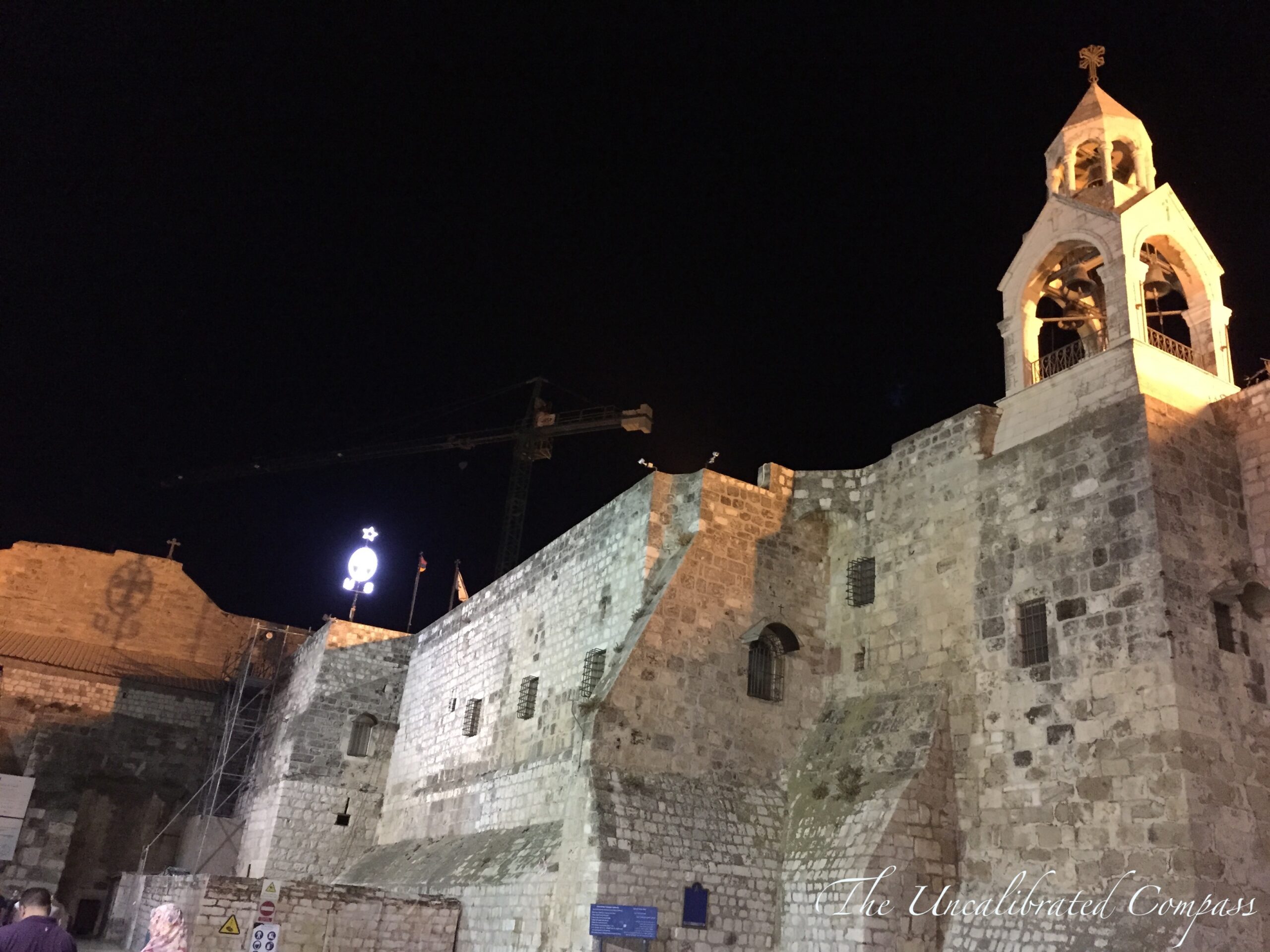
Did you know? To enter the Church of the Nativity, you have to bow. The main entrance, known as the Door of Humility, is only about four feet tall. It wasn't always this way; you can still see the outlines of the massive, grand arches from the Byzantine and Crusader eras above the current opening. In the 1500s, during the Ottoman period, the door was significantly reduced in size for a very practical reason: to prevent looters from riding their horses and carts directly into the church. Today, it serves a dual purpose. While it originally acted as a security gate, it now forces every visitor—from heads of state to backpackers—to physically stoop as they enter, acting as a symbolic reminder to leave their pride at the threshold before stepping into one of the holiest sites in Christendom.
Peak (Dry): March – May and September – November. This time of the year offers mild weather. It can get very hot in the Middle East in general; however, these months offer pleasant weather.
Shoulder Season: June – August. These months can offer great days but the chances of extreme heat are very high.
Off-Peak: December – February. Cold days. These months can offer pleasant days. Cities in the West Bank are festive during December due to Christmas, particularly Bethlehem.
Card, Cash, or both?
No issues using credit cards anywhere. Cash can be helpful when buying at small local markets – for example, fresh bread with hummus in Bethlehem or in East Jerusalem.
Connectivity & Tech
Network Reality: Cellular service is usually good everywhere in Israel and in Palestine. However, there are some places where service can decrease – particularly in more rural areas.
Power & Plugs: The region uses Type H (three pins in a Y-shape) and Type C (Euro-style two round pins). Most modern outlets are designed to accept both Type C and Type H, but a universal adapter is essential. The voltage is 230V.
My most uncalibrated experience
There is a side of the West Bank that you have to feel to understand, and it’s found in the staggering, open-door hospitality of the people—especially during Ramadan. The act of breaking the fast (Iftar) becomes a powerful, “uncalibrated” bridge. My most profound experience was sitting at a table in Bethlehem after sunset. We were a diverse group of individuals who, among others, included Muslims, Christians, and Jews, all gathered around a single, massive meal. As we shared bread and stories in the cool night air, I was struck by the quiet, unifying force of the moment. It was a powerful reminder that it is the people—each individual—who define everything about any given place in this world.