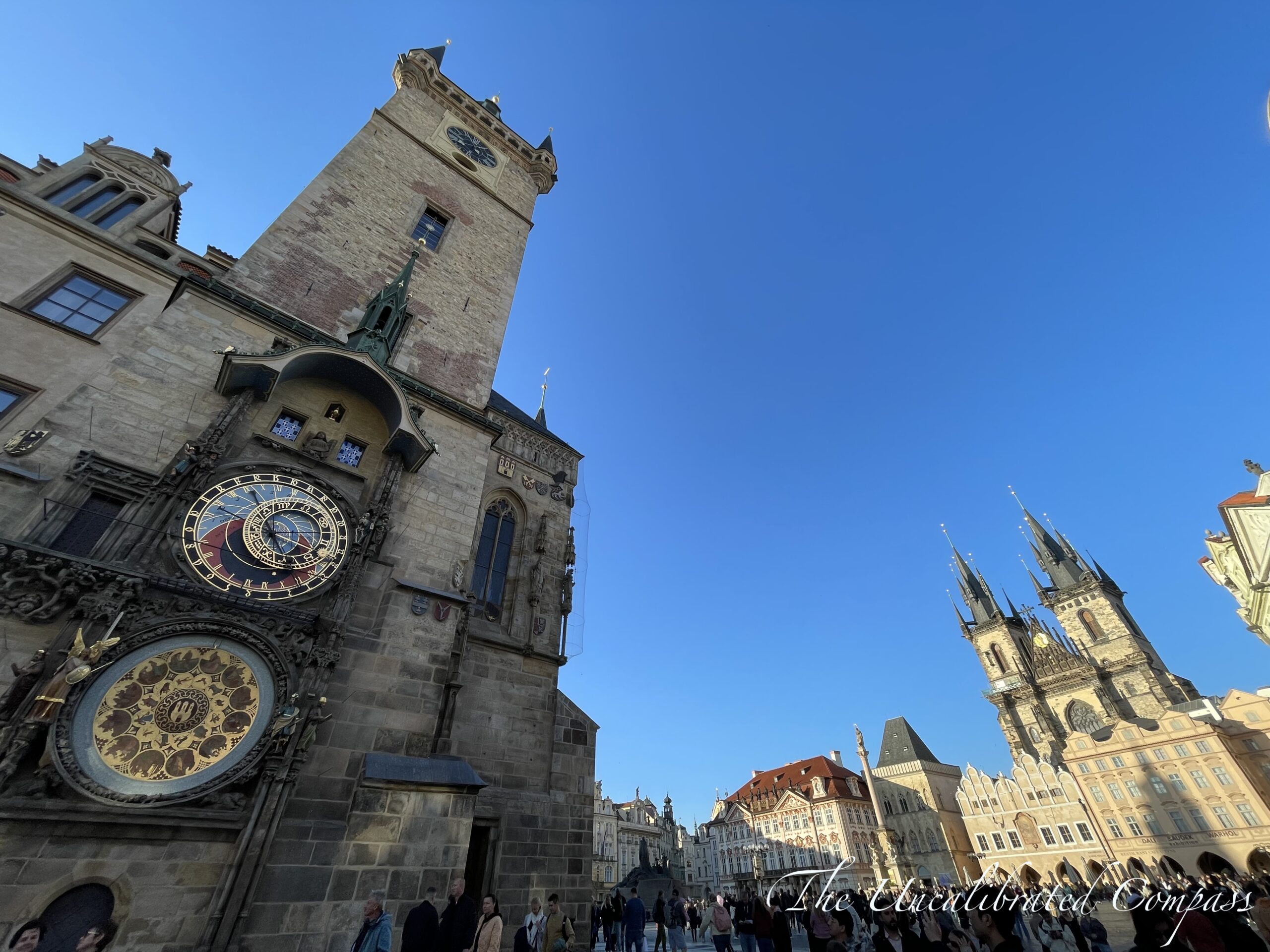
Did you know? The Prague Astronomical Clock is the oldest working astronomical clock in the world, but it doesn't just tell time. It is a massive mechanical computer built in 1410. The blue circle in the center of the dial represents the Earth (as they believed it was the center of the universe back then), and the clock tracks the real-time positions of both the Sun and the Moon as they move through the Zodiac. Even more impressive? The clock is one of the only devices on the planet that still tracks Babylonian Time. In this ancient system, the day is divided into 12 "daylight" hours, meaning an "hour" in the summer (when the sun is up longer) is actually longer than an hour in the winter. The clock’s mechanical brain automatically adjusts the length of these hours every single day based on the season.
Peak – summer time: June – August. Warm and sunny. Good time to explore. Potential for rain.
Shoulder: April – May & September – October. These months offer decent weather to be outside. Not as hot or cold.
Off-Peak: November – March. Cooler days and less crowds. You may experience snow in the winter.
Card, Cash, or both?
Credit cards are widely accepted throughout Czechia. ATMs are very accessible if needed.
Connectivity & Tech
Network Reality: Our international roaming plan through our US carrier worked well everywhere.
Power & Plugs: Czechia uses Type E outlets (with a grounding pin). Standard European Type C/F plugs usually fit. The voltage is 230V.
My most uncalibrated experience
My most uncalibrated moment was that first step into the Old Town Square. No matter how many photos you see, nothing prepares you for the scale and the sheer “magic” of that architecture. It feels like you’ve walked onto a movie set, but the history is real. We decided to climb the Clock Tower, and looking out over the city from the top was incredible. From that height, you can see how the “City of a Hundred Spires” got its name.