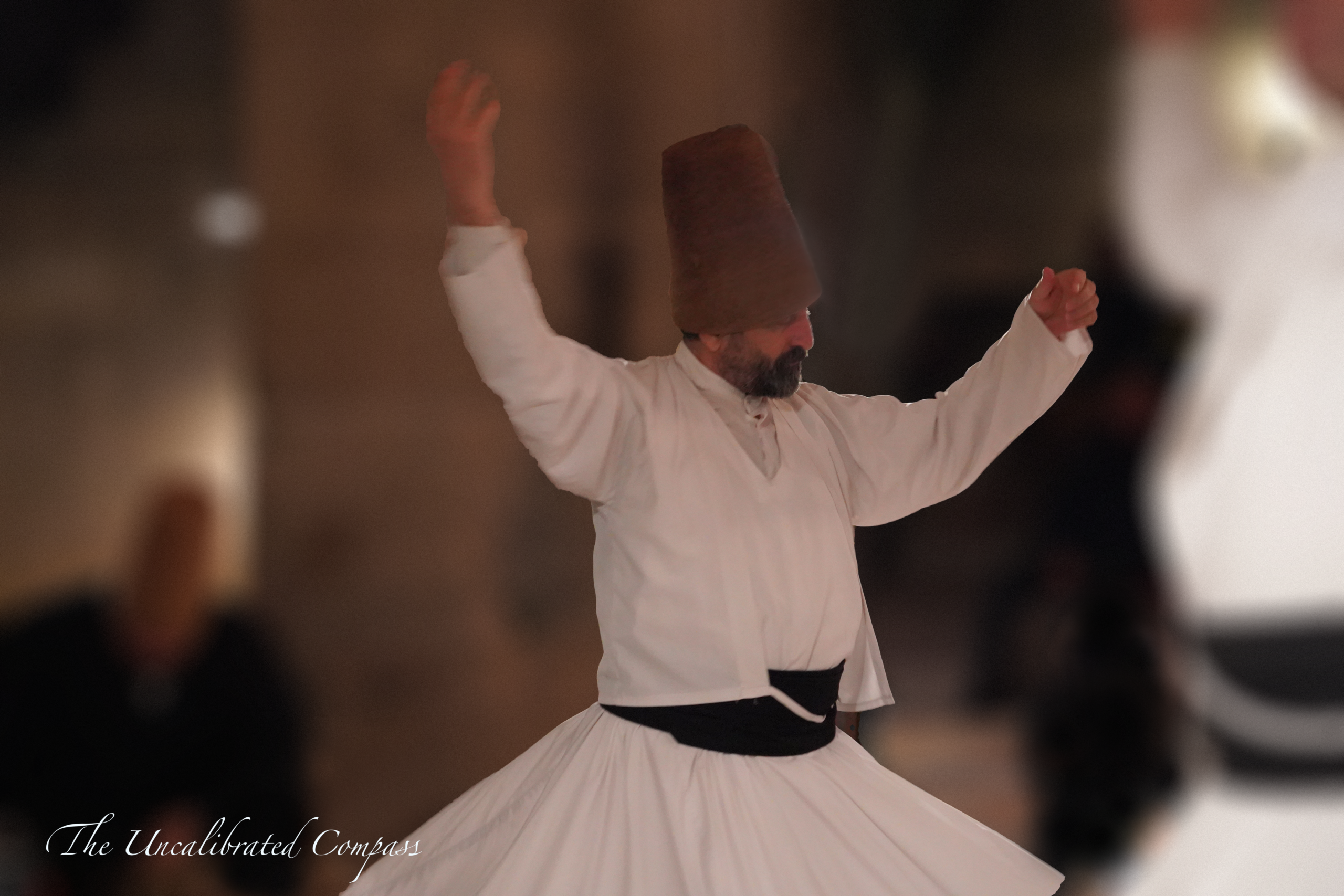
Did you know? The "whirling" isn't just a dance; it’s a sophisticated physical meditation called Sema. To prevent getting dizzy during a performance that can last for an hour, the Dervishes use an "uncalibrated" physiological trick: they tilt their head at a specific 25-degree angle. This tilt slightly shifts the fluid in the inner ear (the vestibular system), helping them maintain balance while spinning at high speeds. But the most "uncalibrated" part is their hands: the right palm faces upward to receive blessings from heaven, while the left palm faces downward to pass those blessings onto the earth. They act as a human bridge between the divine and the physical world, spinning counter-clockwise to align their hearts with the rotation of the planets.
Peak: June – August. These months offer hot and dry days. Expect more crowds.
Shoulder: April – May & September – October. These months offer great weather for exploring but are cooler. You can experience cool nights. Not too cold and not too hot – with fewer crowds.
Off-Peak: November – March. Chilly weather but less crowds. You may experience snow. It a great time to visit historical areas without many crowds. In November you can still get sunny beach days. Cappadocia is magical in the snow.
Card, Cash, or both?
Credit cards are widely accepted throughout Türkiye; however, I recommend carrying cash for remote towns and for some shops in bazaars.
Connectivity & Tech
Cellular Service: Service is great throughout the country, except in some remote areas.
Power & Plugs: Türkiye uses Type C and F (Standard European). The voltage is 230V.
My most uncalibrated experience
Driving from Konya to Göreme. We woke up to a total blizzard, and soon we were driving through a “white-out” where the wind made everything invisible. In the middle of nowhere, we spotted a yurt that functioned as a small roadside restaurant. We thought it was closed or abandoned, but just as we were leaving, an older man appeared and waved us in. He had no electricity and no supplies because the storm had cut him off, but he opened his doors anyway. He started a wood fire to warm us up, and despite the language barrier, we spent the afternoon communicating through gestures. He managed to make us soup, salad, and Turkish coffee from what he had left in his kitchen. Sitting in that warm yurt restaurant while the snow piled up to our knees outside was one of the most “uncalibrated” and hospitable experience I’ve ever had.